Musa A Odhiambo
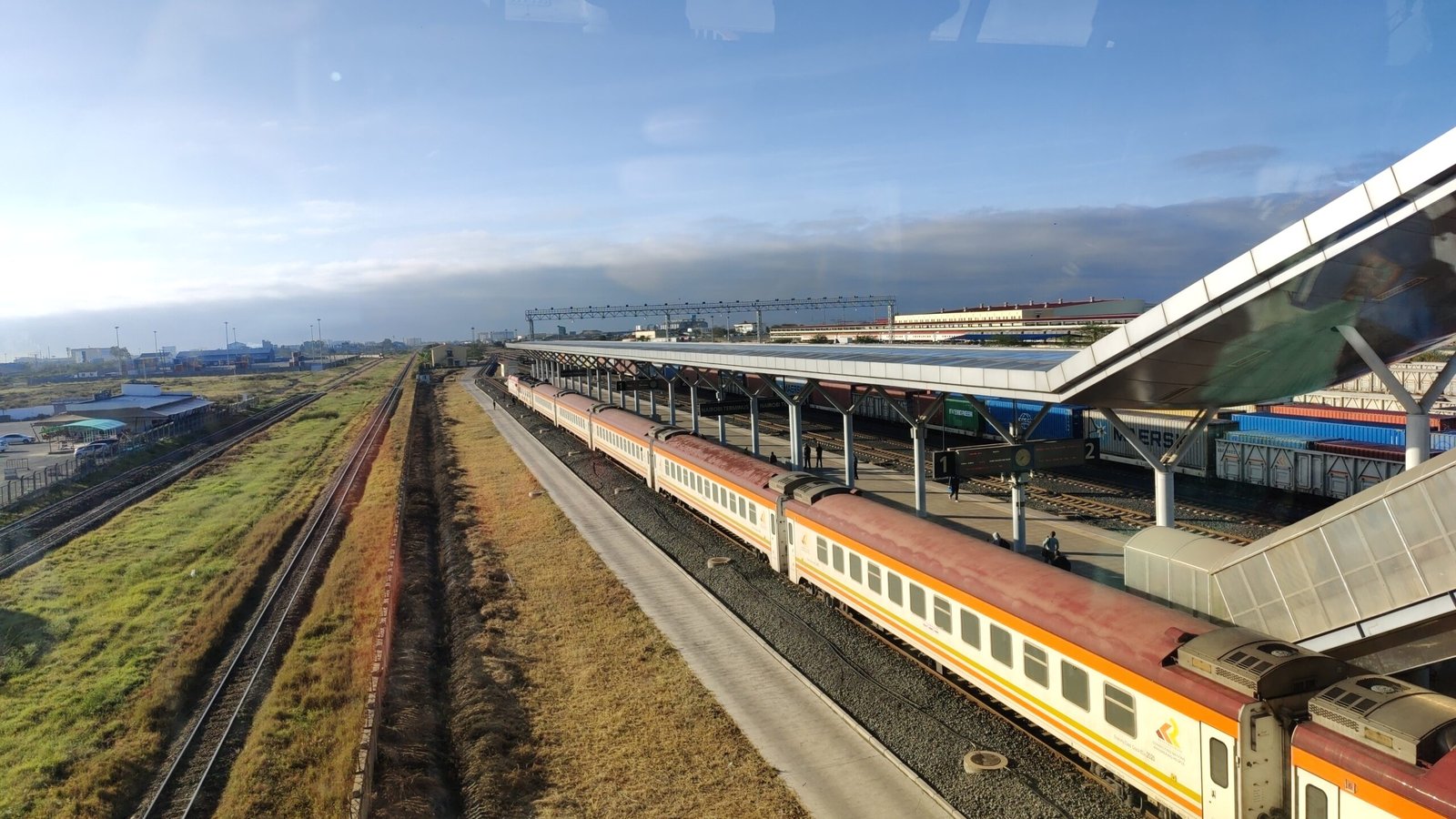
Kenya’s Standard Gauge Railway (SGR) has become one of the country’s most significant modern transport infrastructure projects, connecting the Port of Mombasa with Nairobi and the wider inland economy. Introduced as a modern replacement for the ageing railway infrastructure that had served Kenya for generations, the SGR was designed to move people and goods more efficiently while strengthening Kenya’s position as a regional transport and logistics hub.
Today, the railway story is entering another chapter as construction progresses toward Kisumu and Malaba, potentially extending the economic corridor from the Indian Ocean to Kenya’s western border and Uganda.
From Mombasa to Nairobi
The first major section of the SGR connected Mombasa and Nairobi, transforming passenger and freight travel between the coast and the capital. Passenger services began in May 2017 under the now-famous Madaraka Express, while commercial freight operations followed in 2018. Kenya Railways describes the railway as providing dedicated passenger and freight services, with cargo transported between Mombasa and inland container depots.
The passenger service has also become an important alternative to road and air travel. Kenya Railways’ current schedule includes express, inter-county and night services between Nairobi and Mombasa. Beyond passengers, however, freight is arguably where the SGR’s strategic importance becomes most visible.
Moving Kenya’s Cargo
Mombasa is one of East Africa’s most important gateways for international trade. Cargo arriving at the port must eventually reach businesses and consumers in Kenya and neighbouring countries. The SGR provides a rail-based alternative for moving containerized and bulk cargo inland. Kenya Railways currently operates freight services carrying containerized cargo to the Nairobi Inland Container Depot and Naivasha Inland Container Depot, including steel, grain, fertilizer and other goods.
The Naivasha Inland Container Depot adds another important piece to this logistics network. According to Kenya Railways, the facility is connected to the Mombasa port by rail and is designed to bring port services closer to customers while reducing pressure on the Mombasa and Nairobi logistics systems.
This matters because efficient logistics can influence the final cost of goods. The shorter and more predictable movement of cargo can help businesses plan inventory, reduce delays and connect more effectively with domestic and regional markets.
The Railway Reaches the Rift Valley
The Nairobi–Naivasha extension, commonly referred to as Phase 2A, added another 120 kilometers to the SGR network. It extended the railway westward from Nairobi toward the Rift Valley and connected the system to the Naivasha Inland Container Depot.
The significance goes beyond the railway itself. Infrastructure such as roads, logistics facilities, warehouses, industrial parks and distribution centres can develop around major transport corridors. A railway therefore has the potential to become more than a track between two destinations. It can become a platform around which economic activity develops.
The Next Frontier: Kisumu and Malaba
The next stage could be even more significant for western Kenya and regional trade. In March 2026, Kenya formally launched construction of the Naivasha–Kisumu–Malaba SGR project. The planned Naivasha–Kisumu section is approximately 264 kilometers, with an additional 8.69-kilometre branch planned to connect to the proposed Kisumu Port. The Kisumu–Malaba section is planned at approximately 107 kilometers.
Actual construction work on the Naivasha–Kisumu section commenced in July 2026, when the first rail and sleepers were laid in Narok County. The project is expected to traverse nine counties, including Narok, Bomet, Nyamira, Kericho, Kisumu, Siaya, Vihiga, Kakamega and Busia.
For western Kenya, this could fundamentally change the region’s relationship with national and international markets. Kisumu’s position on Lake Victoria also gives the proposed railway connection a broader logistical dimension. A rail link to a modernised lakeside port could potentially connect rail, road, lake transport and international trade into a more integrated system.
Beyond Kenya’s Borders
Malaba is strategically important because it sits on Kenya’s border with Uganda. A completed SGR connection to Malaba would create the possibility of a more continuous modern railway corridor from Mombasa through Nairobi, Naivasha and western Kenya toward Uganda. The Kenyan government has presented the project as part of a broader effort to strengthen regional trade and connectivity within East Africa. The potential implications extend beyond passenger transport.
A more efficient railway corridor could support the movement of agricultural products, manufactured goods, fuel, construction materials and containerized imports and exports. For countries that depend on the Northern Corridor for access to the sea, improvements in transport efficiency can have consequences far beyond the railway itself.
Infrastructure Is Only as Strong as Its Connections
Yet building railway tracks alone does not guarantee economic transformation. The SGR needs effective connections to ports, roads, warehouses, industrial areas, farms, cities and border markets. This is why the development of inland container depots and supporting road infrastructure matters just as much as the railway itself. Kenya Railways says the Naivasha ICD is designed to serve transit cargo destined for countries including Uganda, Rwanda, South Sudan, Tanzania, Burundi and the Democratic Republic of Congo. The bigger objective is therefore not simply to build a railway. It is to build a multimodal logistics network.
The Economic Opportunity
The SGR also represents an opportunity to rethink how infrastructure contributes to Kenya’s economic development. Railway construction creates demand for engineers, technicians, construction workers, suppliers and logistics professionals. Once operational, railway corridors can support businesses involved in freight handling, warehousing, hospitality, retail and manufacturing. For counties along the Naivasha–Kisumu–Malaba route, the challenge will be converting connectivity into local economic opportunity.
Agricultural producers, small businesses and manufacturers need access to the infrastructure. Industrial and logistics zones need to develop around strategic stations. Skills development needs to keep pace with the new infrastructure. Otherwise, a railway can pass through a county without fully transforming its local economy.
The Cost Question
Large infrastructure projects also require careful consideration of financing, operational efficiency, maintenance and utilisation. The long-term value of the SGR will therefore depend not only on how many kilometers of track are constructed, but on how effectively those kilometers are used.
Kenya Railways’ own strategic planning has identified the importance of investment, management and sustainability in railway operations. This makes freight volumes, passenger numbers, service reliability and connections with other transport modes important indicators of the railway’s performance.
From Railway to Economic Corridor
Kenya’s SGR is ultimately bigger than the trains running on its tracks. It is an attempt to create an economic corridor linking the Indian Ocean, Kenya’s major urban centres, agricultural regions, Lake Victoria and the East African hinterland.
The Mombasa–Nairobi section established the foundation. The Nairobi–Naivasha extension expanded the network into the Rift Valley. The ongoing Naivasha–Kisumu–Malaba project could take the railway into a new phase by connecting western Kenya more directly to the national and regional logistics system. If the railway is integrated effectively with ports, roads, agriculture, manufacturing and regional trade, its greatest impact may not be measured in kilometers of track. It may be measured in how quickly goods move, how markets connect, how businesses grow and how communities participate in Kenya’s economic transformation.
Kenya’s railway journey is therefore still being written. The next destination is not simply Kisumu or Malaba. It is a more connected economy.
Empower Digest – Connect. Learn. Transform.


 Brian Onyango