Musa A Odhiambo
The Boda Boda Economy: How Two Wheels Are Powering Kenya’s Youth
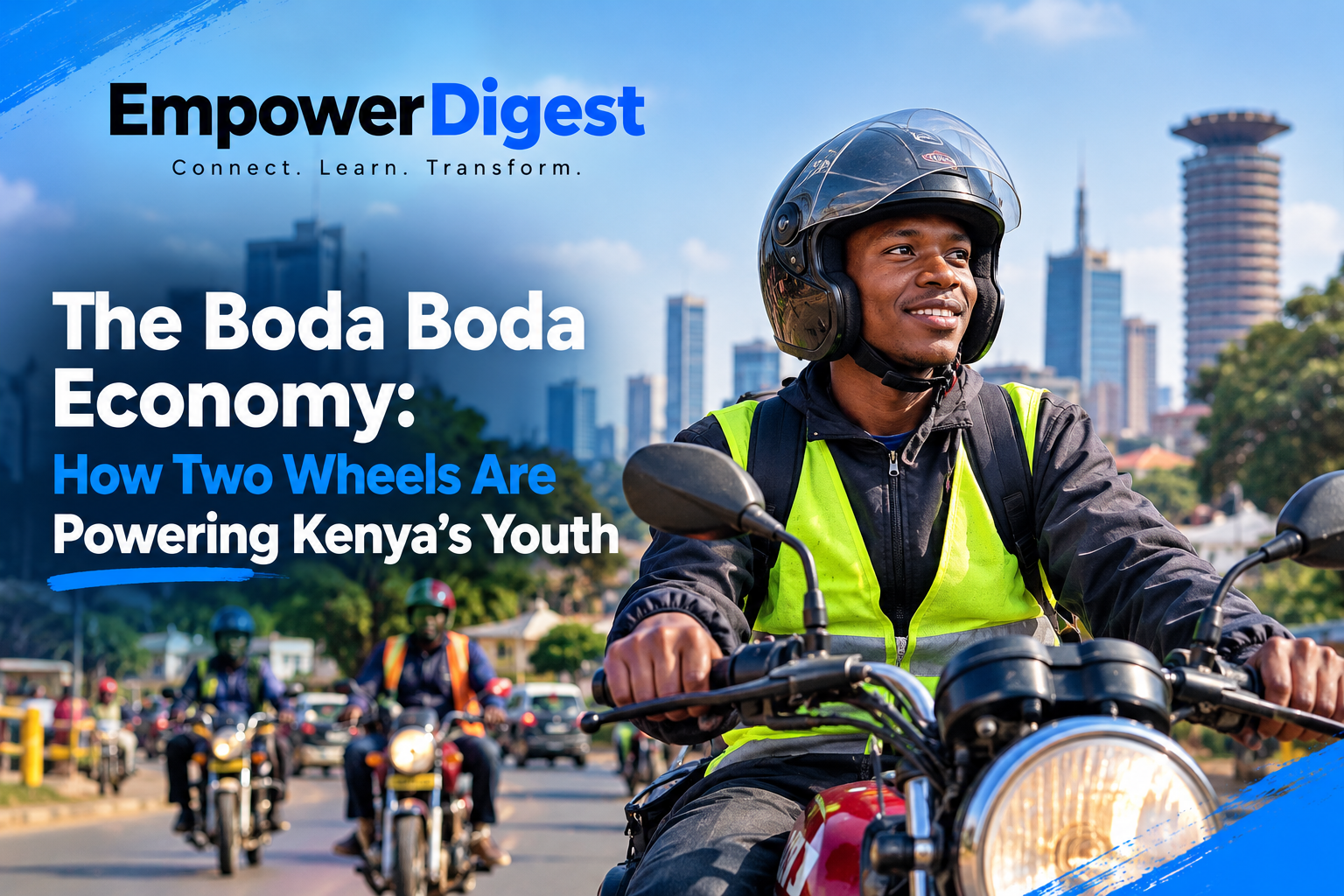
At 5:40 a.m., before the first matatu has left the stage, Brian is already wiping dust off his motorbike. He has a flask of tea, a full tank and a phone mounted on the handlebars. By nightfall he will have carried schoolchildren, sacks of onions, a nurse running late for her shift and a groom’s wedding suit. This is the boda boda economy: informal, relentless and quietly holding up a huge part of Kenya’s everyday life.
More than a ride
Boda bodas began as bicycle taxis ferrying people across the Kenya-Uganda border, and the name stuck as motorbikes took over. Today they are everywhere, from Nairobi’s estates to dirt tracks in Kakamega and Kitui. For many young Kenyans, a motorbike is the most reachable first step into earning a living. It needs far less capital than a shop or a matatu, and the work starts the day you get the keys.
That is why riding has become one of the most visible sources of youth employment in the country. Each rider supports a wider chain of people: mechanics, spare parts dealers, fuel attendants, helmet sellers, lenders and the vendors who set up at every stage.
Where roads change everything
The business only works as far as the road does. When a new murram or tarmac road reaches a village, boda boda fares drop, trips get faster and the bikes last longer. Farmers who once carried produce on their backs can move it to market in an hour. Mothers reach clinics. Teachers and traders start coming in.
Where roads are poor, the same bike becomes the only vehicle that can get through in the rainy season. In many rural areas, boda bodas are the ambulance, the delivery van and the school bus rolled into one.
Technology is rewriting the rules
Ride-hailing platforms such as SafeBoda, Bolt and Uber have brought apps, digital payments and rider profiles to a trade that once ran purely on handshakes and stage chairmen. For riders, this can mean steadier customers and a record of earnings that helps when applying for a loan. For passengers, it means a known driver, a tracked trip and a fare agreed before the ride starts.
Mobile money has done just as much. M-Pesa lets riders get paid instantly, save in small amounts and repay bike financing in instalments, all from a basic phone.
The hard part nobody should ignore
The boda boda story is not only a success story. Riders face real pressures:
- Safety: Motorbikes account for a large share of road deaths in Kenya, and many riders and passengers still go without helmets or proper protection.
- Costs: Fuel prices, bike loan repayments, fines and platform commissions can eat up most of a day’s takings.
- Insecurity of work: Few riders have insurance, health cover or savings to fall back on after an accident or a bad month.
- Regulation: Licensing and rules differ between counties, and enforcement can feel inconsistent or unfair.
Many riders say they want to be treated as business owners, not a problem to be managed.
What young riders are building
Some of the most interesting stories are happening around the bike rather than on it. Riders are forming Saccos to pool savings and negotiate better loan terms. Others are using their bikes to start side businesses such as parcel delivery, farm produce runs and mobile phone charging. Young mechanics and electric-bike startups are testing battery swapping to cut fuel costs, a shift that could change the economics of the whole industry.
What needs to happen next
If the boda boda economy is going to keep delivering for young Kenyans, a few things matter most:
- Better roads and maintenance, especially in rural counties where one bad stretch can cut off a whole market.
- Affordable insurance and health cover designed for informal workers.
- Rider training and safety gear that is accessible, not just required on paper.
- Fair, predictable regulation developed together with rider associations.
- Access to fair financing so riders can own their bikes without crippling repayments.
The road ahead
The boda boda rider is easy to overlook, weaving through traffic with someone else’s destination in mind. But look closer and you find a generation of young Kenyans who built an industry with little more than a bike, a phone and grit. Give them safer roads, fair rules and real financial tools, and that industry can do far more than move people. It can move a country.